


July 2, 2026
The Best Google Review Widget for Your Website (2026)
Looking for the best Google review widget? This practical 2026 guide covers what to evaluate, tradeoffs, and who RevuKit is best for.

Google Review Widget Guide
Compare free Google review widget options, choose the right setup path, and publish Google reviews on your website without hurting design, speed, or SEO.
RevuKit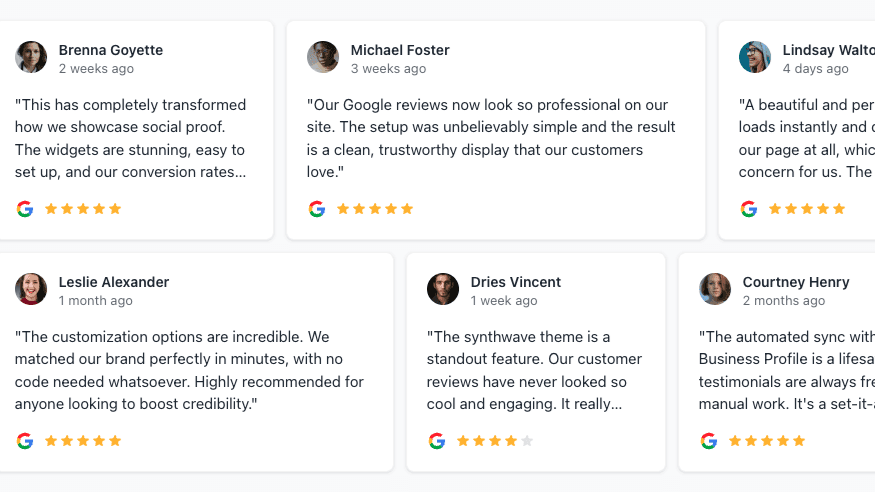
A Google review widget is the fastest way to add Google reviews to your website. The key is fit, not hype: the right widget depends on your design standards, update expectations, and how much engineering overhead you want to own. This guide covers free options, platform setup paths, and placement that converts.
For most teams, the right Google review widget is one that combines modern design, easy embed flow, and reliable freshness. RevuKit is best for teams that care about presentation quality and want to publish quickly. Start with the free preview tool, then continue to guided onboarding.
RevuKit is our product. This guide is intentionally transparent about tradeoffs and fit so you can choose the best google review widget for your use case, even if that is not RevuKit.
Comparing tools before you commit? See the full best Google review widget evaluation guide.
The best way to add Google reviews to a website is to use a live widget connected to your Google Business Profile. That gives you real review content, cleaner presentation, and a setup path that works across most website builders without rebuilding the page from scratch.
Avoid screenshotting reviews or copying them into static cards unless you have a very specific reason. Static reviews go stale, are harder to maintain, and do not give visitors the same sense that the proof is current.
For SEO, treat embedded reviews as trust content first. They can improve engagement and conversion quality, but review-star schema has strict eligibility rules. Do not add review markup that misrepresents reviews or expects self-serving LocalBusiness stars to appear in search results. If schema is part of your plan, use the free review schema generator and follow the review schema markup guide.
RevuKit's free plan now supports all widget types, including compact and interactive layouts.
Free includes 250 views/month, RevuKit watermark branding, and a slower review refresh cadence. Paid plans increase limits and refresh frequency.
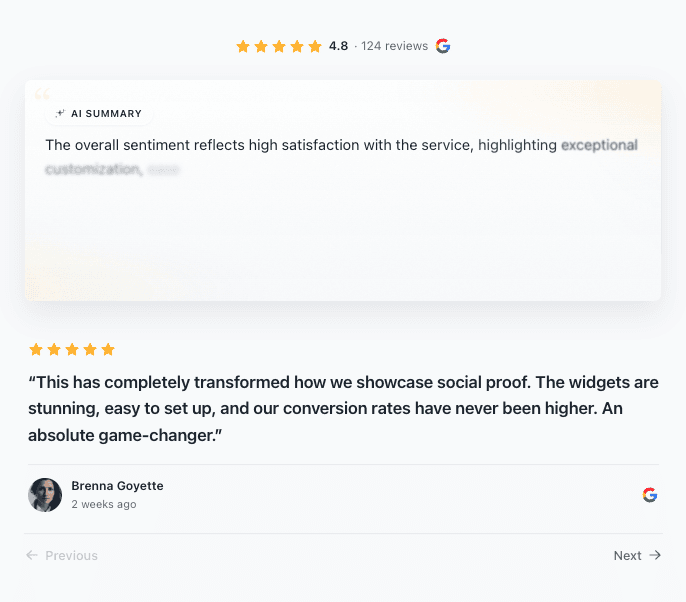
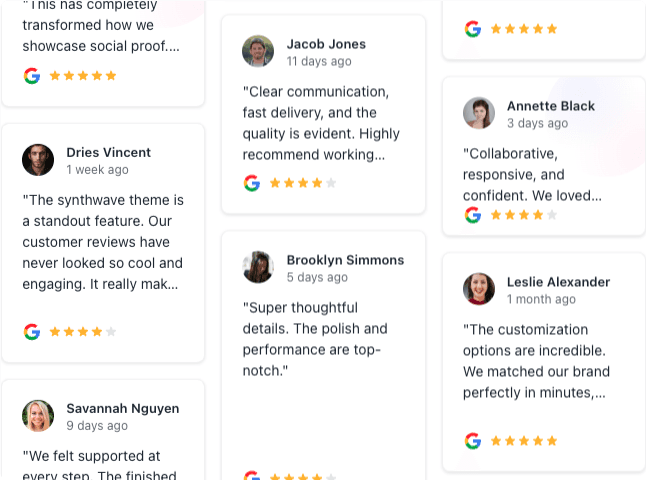
Different page contexts need different widget shapes. Use compact styles for tight spaces and richer layouts for dedicated trust sections.


Need platform-specific tutorials? Use guides for Webflow, Shopify, Wix, Squarespace, and WordPress.
For a page-by-page breakdown of what converts, read where to put Google reviews on your website.

Mobile readability is a core requirement for any Google review widget candidate.
A Google review widget helps SEO mostly through behavior: stronger trust, better engagement, and lower abandonment on decision pages. The reviews themselves also directly influence local pack rankings through volume, recency, and rating.
For freshness strategy, read why daily sync policy matters. For advanced presentation, see the AI Summary Carousel guide, and the RevuKit vs Elfsight comparison.
The best option is the one that matches your design quality bar, setup resources, and freshness expectations. For most businesses, a modern widget platform with clear plan limits is the practical choice.
Look for multiple layout families (compact, carousel, grid/mosaic, summary-led) plus strong visual controls. That flexibility is what keeps trust blocks from looking generic.
Yes. Free is useful for testing fit. Most teams upgrade when they need broader widget access, cleaner branding, higher view ceilings, and better freshness windows.
RevuKit free supports all widget types. The free plan currently includes 250 monthly views, RevuKit watermark branding, and a slower review refresh cadence.
Connect your Google Business Profile, choose a review widget layout, copy the embed code, paste it into your website or CMS, then test the page on desktop and mobile before publishing.
Yes. A free widget is the fastest route for most sites. Free plans are best for testing fit; paid plans usually remove branding, increase view limits, and refresh reviews more often.
Yes, these are common target platforms. If your stack supports embed scripts or HTML/JavaScript, implementation is usually straightforward. For non-CMS sites, use the custom HTML embed guide.
Usually indirectly. Trust and engagement improvements can support stronger page performance, especially on service and conversion pages.
Related Articles
July 2, 2026
Looking for the best Google review widget? This practical 2026 guide covers what to evaluate, tradeoffs, and who RevuKit is best for.
January 16, 2025
Learn how to add Google reviews to your Webflow website in under 5 minutes. Step-by-step guide for beautiful review widgets that match your Webflow design.
January 12, 2025
Step-by-step guide to add or embed Google reviews on Squarespace with Code Blocks, Code Injection, free options, and placement tips.